
Meta Description:
Explore how a World-wide Money Exchanger (PtoP) revolutionizes international currency exchange through peer-to-peer technology, offering lower fees, faster transfers, enhanced transparency, and global financial accessibility.
World-wide Money Exchanger (PtoP): Redefining Global Currency Exchange
The world has become increasingly interconnected. Businesses operate across continents, freelancers work remotely for international clients, families send remittances abroad, and travelers move from country to country with ease.
However, one major challenge remains consistent: exchanging money across borders efficiently and affordably.
Traditional banking systems often involve high fees, slow processing times, and unfavorable exchange rates.
In response to these limitations, the concept of a World-wide Money Exchanger (PtoP) has emerged as a powerful alternative.
A peer-to-peer (PtoP) money exchanger allows individuals to exchange currencies directly with one another through a digital platform,
minimizing reliance on traditional banks. This innovative approach is transforming how global financial transactions occur.
In this in-depth guide, we will examine how worldwide PtoP money exchangers work, their advantages, risks, regulatory considerations, and why they represent the future of international currency exchange.
Understanding the Concept of P2P Money Exchange
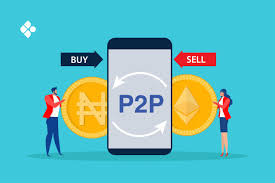
A World-wide Money Exchanger (PtoP) is an online platform that connects users who want to exchange different currencies directly. Instead of sending money internationally through multiple banks, the platform matches users with opposite currency needs.
For example:
-
A freelancer in Canada wants to receive British pounds.
-
A business owner in the UK needs Canadian dollars.
-
The platform matches both parties and facilitates the exchange at a competitive rate.
This system reduces the need for costly international wire transfers and intermediary banks.
Some fintech companies have incorporated peer-to-peer principles into their services.
Platforms like Wise and Revolut offer multi-currency accounts and competitive exchange rates, although their models are not purely decentralized P2P systems.
Why Traditional Currency Exchange Falls Short
To understand the value of a PtoP exchanger, it’s important to identify the drawbacks of conventional systems:
1. Exchange Rate Margins
Banks typically add hidden markups to the real exchange rate.
2. Transfer Fees
International transfers can incur fixed fees plus percentage-based charges.
3. Processing Delays
Cross-border wires may take several days due to intermediary banks.
4. Lack of Transparency
Customers often don’t see the true cost breakdown.
These inefficiencies create demand for smarter, technology-driven alternatives.
How a World-wide PtoP Money Exchanger Works
Though platforms vary in structure, the core mechanism usually includes:
Account Creation and Verification
Users register and complete identity verification (KYC) to comply with financial regulations.
Currency Listing
Users specify the currency they have and the currency they need.
Smart Matching
Algorithms match compatible users based on currency demand.
Escrow Protection
Funds are temporarily held in escrow to ensure both parties complete the exchange.
Settlement
Once both users confirm receipt, the transaction finalizes.
Some P2P platforms also integrate cryptocurrency mechanisms similar to marketplaces like Paxful, where escrow services protect both buyers and sellers.
Core Benefits of a Global P2P Money Exchanger
1. Lower Transaction Costs
By eliminating intermediaries, operational expenses decrease significantly.
2. Competitive Exchange Rates
Rates are often closer to the mid-market rate.
3. Faster Transfers
Local bank transfers replace lengthy international wires.
4. Financial Inclusion
Users without full banking access may still participate through digital wallets.
5. Greater Transparency
Users clearly see fees and rates before confirming transactions.
Who Can Benefit from a World-wide PtoP Exchanger?
Freelancers and Remote Professionals
With remote work expanding globally, professionals can receive payments in foreign currencies without excessive conversion costs.
International Students
Students studying abroad can exchange tuition and living expenses more efficiently.
Small and Medium Enterprises (SMEs)
Businesses importing or exporting goods can reduce operational expenses.
Migrant Workers
Remittances sent home become more affordable.
Digital Nomads
Frequent travelers benefit from seamless multi-currency management.
Technology Driving Peer-to-Peer Currency Exchange
Modern P2P money exchangers rely on advanced technologies:
Artificial Intelligence
AI optimizes user matching for faster transaction completion.
Blockchain Infrastructure
Some platforms use blockchain networks like Ethereum to enhance transparency and automate escrow processes through smart contracts.
Mobile Applications
User-friendly apps enable seamless exchanges worldwide.
Multi-Currency Digital Wallets
Integrated wallets simplify storing and converting various currencies.
Technology ensures that transactions are secure, fast, and scalable across borders.
Security and Risk Management
Security remains a top concern in financial transactions. Reliable P2P platforms implement:
Identity Verification (KYC)
Prevents fraud and money laundering.
Escrow Services
Protects both parties during transactions.
Two-Factor Authentication
Adds an extra layer of account protection.
Transaction Monitoring
Detects suspicious activity.
Dispute Resolution Mechanisms
Ensures fair resolution in case of conflicts.
Despite these safeguards, users should exercise caution and choose regulated platforms.
Comparing P2P Exchange with Traditional Banks
| Feature | Traditional Bank | P2P Money Exchanger |
|---|---|---|
| Exchange Rate | Marked-up | Market-based |
| Fees | High | Low |
| Processing Time | 2–5 Days | Same Day / Instant |
| Transparency | Limited | High |
| Accessibility | Bank Required | Online Platform |
This comparison illustrates why many individuals and businesses are shifting toward P2P alternatives.
Regulatory Landscape and Compliance
Operating a World-wide Money Exchanger (PtoP) requires compliance with international financial laws. Platforms must adhere to:
-
Anti-Money Laundering (AML) regulations
-
Know Your Customer (KYC) policies
-
Cross-border transaction reporting
-
Data protection standards
Governments worldwide are increasingly monitoring digital financial services to ensure legal compliance while fostering innovation.
Users should confirm that their chosen platform operates legally in their jurisdiction.
Challenges Facing Global P2P Money Exchange
Although promising, this system faces obstacles:
Regulatory Restrictions
Some countries impose strict foreign exchange controls.
Liquidity Constraints
Rare currency pairs may experience delays.
Trust Issues
New platforms must establish credibility.
Cybersecurity Threats
Financial platforms are targets for hackers.
Continued technological advancement and regulatory clarity will help address these challenges.
The Role of Decentralized Finance (DeFi)
Decentralized Finance (DeFi) has introduced innovative models for financial exchange. By removing centralized authorities, DeFi empowers users to control their funds directly.
Some P2P currency exchangers draw inspiration from decentralized systems pioneered by blockchain-based projects and platforms like LocalBitcoins,
which demonstrated how direct user-to-user financial exchange could function effectively.
While not all P2P money exchangers are fully decentralized, many incorporate elements of this philosophy.
Future Trends in World-wide P2P Money Exchange
The next decade may bring significant advancements:
Real-Time Global Settlements
Instant international transfers with minimal fees.
Integration with Central Bank Digital Currencies (CBDCs)
Digital national currencies may integrate with P2P platforms.
AI-Powered Fraud Detection
Advanced machine learning models will enhance security.
Greater Financial Accessibility
Billions of unbanked individuals may gain global transaction capabilities.
As globalization intensifies, demand for efficient cross-border solutions will continue growing.
Best Practices for Users
To safely use a World-wide P2P Money Exchanger:
-
Verify platform regulation and reviews
-
Enable two-factor authentication
-
Avoid off-platform communication
-
Start with small transactions
-
Keep records of exchanges
-
Monitor exchange rate trends
Prudent decision-making enhances safety and efficiency.
Conclusion
A World-wide Money Exchanger (PtoP) is reshaping the landscape of international currency exchange. By leveraging digital platforms, smart matching algorithms,
escrow protection, and advanced security systems, peer-to-peer exchangers offer a faster, more transparent, and cost-effective alternative to traditional banking methods.
As remote work, digital commerce, and cross-border collaboration continue to expand, the need for seamless global currency exchange will only increase.
P2P money exchangers represent a major step toward a more inclusive, efficient, and technology-driven financial ecosystem.
The future of global finance is moving toward decentralization, transparency, and user empowerment—and worldwide peer-to-peer currency exchange is at the forefront of this transformation.




Jimmy Krebs –
Usaproseller.com provided clear and practical guidance for using P2P money exchange services.
Duane Lamphere –
The team explained every step in an easy-to-understand way.
Paul Johnson –
Professional and reliable support made exchanging money stress-free.
Peter Atwood –
I appreciated the structured and detailed assistance throughout the process.
Johnnie Reed –
Usaproseller.com handled my questions calmly and efficiently.
Martin Jamerson –
The process was smooth and well-organized from start to finish.